Blogs
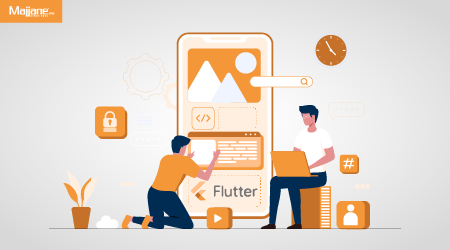
What is Flutter?
Flutter is an open-source mobile application development framework created by Google. It allows developers to build natively compiled applications for mobile, web, and desktop from a single codebase. Flutter is known for its fast development cycle, expressive and flexible user interface, and native-level performance.
Discover the benefits of using Flutter for mobile development :
- Fast development cycle : Flutter’s hot reload feature allows developers to quickly and easily test and iterate on their code, making the development process faster and more efficient.
- Expressive and flexible user interface : Flutter offers a rich set of customizable widgets and layout components that allow developers to build beautiful and intuitive user interfaces.
- Native performance : Flutter apps are compiled into native code, which means they can run smoothly and efficiently on both Android and iOS devices.
- Cross-platform support : Flutter allows developers to create applications for multiple platforms (such as Android, iOS, and the Web) using a single codebase, saving time and resources.
- Strong developer community : Flutter has a large and active developer community, with extensive documentation and resources available. This makes it easier for developers to get help and support when using the framework.
Here are some differences between Flutter and other mobile development frameworks:
- Native vs. cross-platform : Flutter is a cross-platform framework, meaning it allows developers to create applications for multiple platforms (like Android, iOS, and the Web) using a single codebase. Other frameworks, such as React Native, also support cross-platform development, while others, like Android Studio and Xcode, are primarily used for native development.
- Programming language : Flutter uses the Dart programming language, which was developed by Google. Other frameworks may use different languages, such as JavaScript (React Native) or Swift (iOS).
- User interface design : Flutter has its own set of customizable widgets and layout components, allowing developers to build expressive and flexible UI designs. Other frameworks may take a different approach to UI design, for example by using native UI elements or relying on web technologies like HTML and CSS.
- Community and support : Flutter has a large and active developer community, with extensive documentation and resources available. Other frameworks may have varying levels of community support and available resources.
There are many resources available to learn and stay up-to-date with Flutter. Here are some suggestions for finding blog content about Flutter:
- The Flutter website (https://flutter.dev/) has a blog section featuring updates and tutorials on using Flutter.
- The Flutter community on Medium (https://medium.com/flutter) offers a collection of articles written by Flutter developers and enthusiasts.
- The Flutter subreddit (https://www.reddit.com/r/FlutterDev/) is a great place to find discussions and links to interesting articles and tutorials about Flutter.
- The Google Flutter Dev group (https://groups.google.com/forum/#!forum/flutter-dev) is another place to find discussions and ask questions about Flutter development.
I hope this helps! Check out our mobile application page for more information : Majjane-Application mobile
Recent Articles
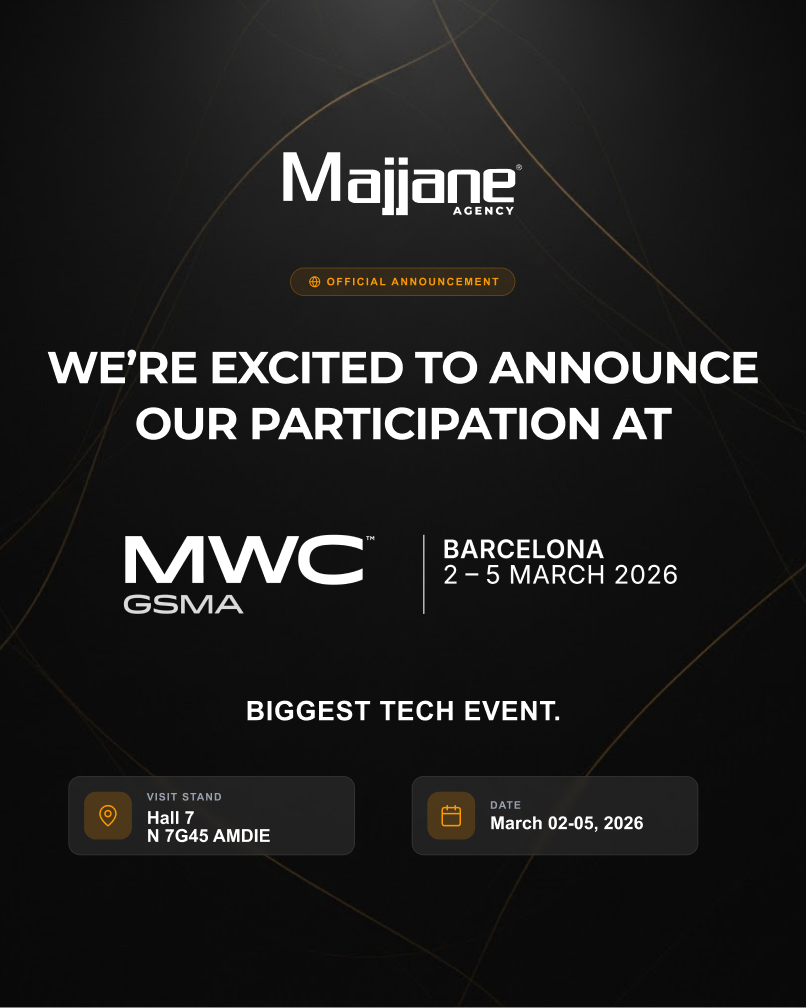
Majjane x MWC-GSMA BARCELONA 2026
Majjane x MWC-GSMA BARCELONA 2026: Tailor Made AI and Digital Solutions After successfully participating in...

Lead Generation: A Complete Guide to Attract Customers
In an increasingly competitive digital environment, attracting the attention of potential customers is no longer...

How much does a mobile application cost?
Developing a mobile application is a crucial investment for businesses looking to go digital and...